Asbestos Pipe Lagging Removal, Kingston upon Thames
Amosite pipe lagging removed from boiler room and basement heating pipework under a negative-pressure enclosure over two days, air clearance confirmed, and full documentation issued.
Pipe Lagging in Kingston's Victorian and Edwardian Properties: The Hidden High-Risk ACM
Kingston upon Thames has a significant stock of Victorian and Edwardian properties, many of which were extended or had their heating systems upgraded during the 1950s and 1960s — precisely the period when amosite (brown asbestos) pipe lagging was most widely used as a thermal insulator on hot water and heating pipes. Unlike asbestos cement, which is a relatively low-risk material, amosite pipe lagging is classified as a high-risk ACM because the fibres are loosely bound and can be released easily when the material is disturbed.
In this Kingston property — a large Victorian terraced house with a basement boiler room — the heating engineer instructed to replace the boiler system identified pipe lagging on the existing pipework and correctly declined to proceed until the lagging had been tested and, if necessary, removed by a licensed contractor.
Laboratory analysis confirmed the presence of amosite. We were instructed, completed the removal over two days, and handed the boiler room and basement back to the heating engineer with a full set of documentation.
Amosite (brown asbestos) is classified as a high-risk fibre type because it is associated with a higher incidence of mesothelioma than chrysotile. Pipe lagging containing amosite is a licensed material under CAR 2012 — its removal requires formal notification, a negative-pressure enclosure, full PPE, and an independent air clearance certificate. Any heating engineer or contractor who disturbs amosite pipe lagging without these precautions is committing a serious breach of health and safety law.
Read the Regulations Guide →How the Project Was Delivered
Refurbishment Survey & Sample Analysis
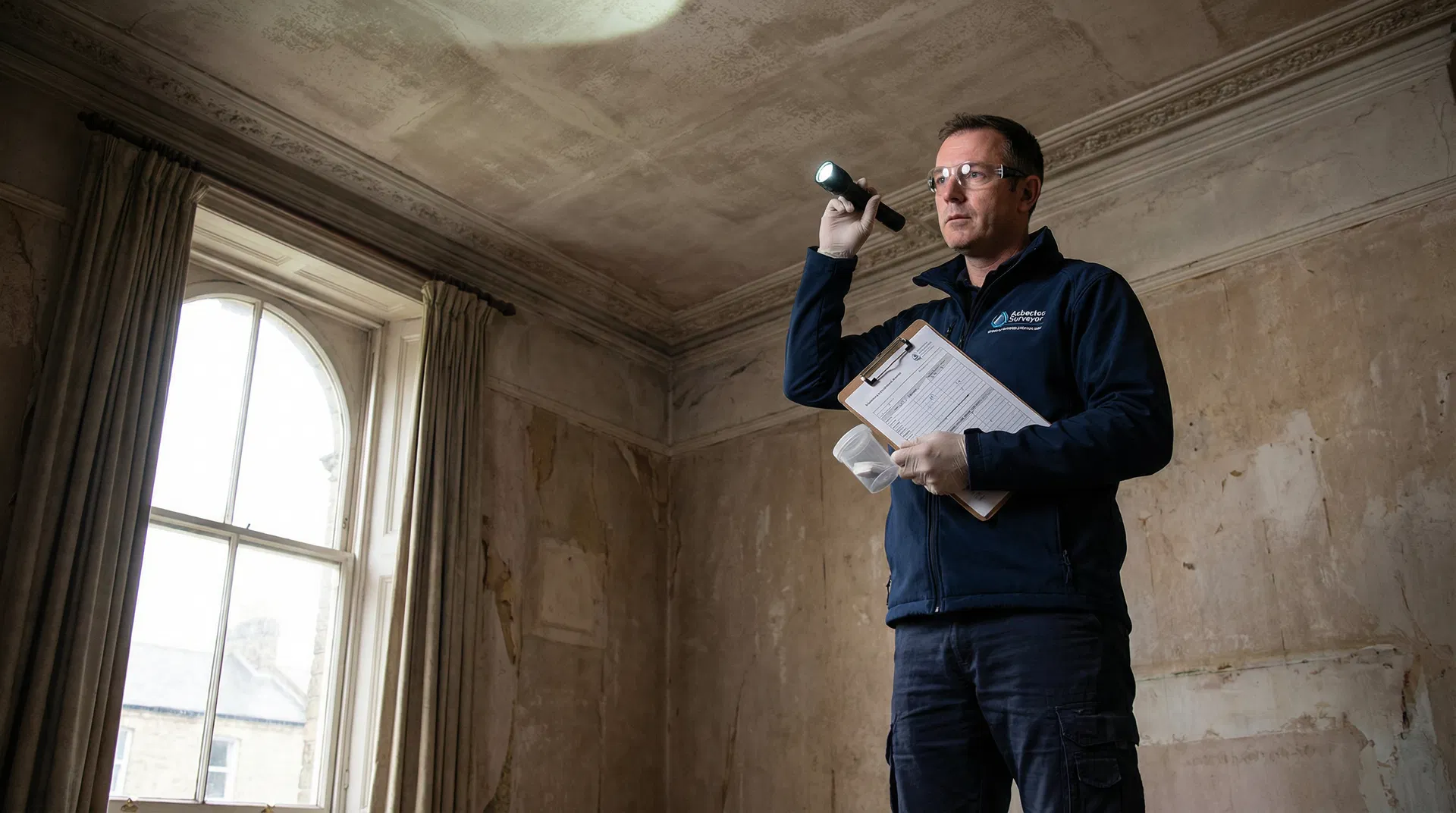
The homeowner in Kingston upon Thames was planning a full boiler room and basement renovation — new heating system, replastering, and rewiring — and had been advised by their heating engineer to have the pipe lagging tested before any work began. Our surveyor attended site and identified pipe lagging on the heating pipework in the boiler room and basement. Samples were submitted to our UKAS-accredited laboratory and results confirmed the presence of amosite (brown asbestos) — a high-risk fibre type that makes the removal a licensed activity under CAR 2012.
Notification & Method Statement
Amosite pipe lagging is classified as a high-risk licensed material under CAR 2012. Our notification was submitted to the relevant authority 14 days before the removal date. A full method statement and risk assessment were prepared and shared with the homeowner and their heating engineer before works commenced. The two-day programme allowed for a full day of removal and a second day for decontamination and air clearance.
Negative-Pressure Enclosure
On day one, the boiler room and basement were prepared before any disturbance of the lagging. All doorways and openings were sealed with polythene sheeting and duct tape. A negative-pressure enclosure was erected, with HEPA-filtered air extraction units running throughout the works. The negative pressure ensures that any airborne fibres released during removal are drawn towards the extraction units rather than escaping into the rest of the property.

Pipe Lagging Removal
The amosite lagging was removed from the heating pipework in controlled sections. The lagging was wetted before removal to suppress fibre release, then carefully stripped from the pipes and collected directly into double-lined asbestos waste sacks. All waste was sealed inside the enclosure before being removed from the building. The pipework was cleaned and decontaminated following removal.
Decontamination & Air Clearance
On day two, a thorough decontamination of all affected surfaces was carried out. A four-stage visual inspection was then completed inside the enclosure. An air clearance reading was taken — the result was below the 0.01 f/cm³ clearance indicator, confirming the boiler room and basement were safe for unrestricted use. The homeowner's heating engineer was notified and was able to begin the new heating system installation the following day.
Documentation
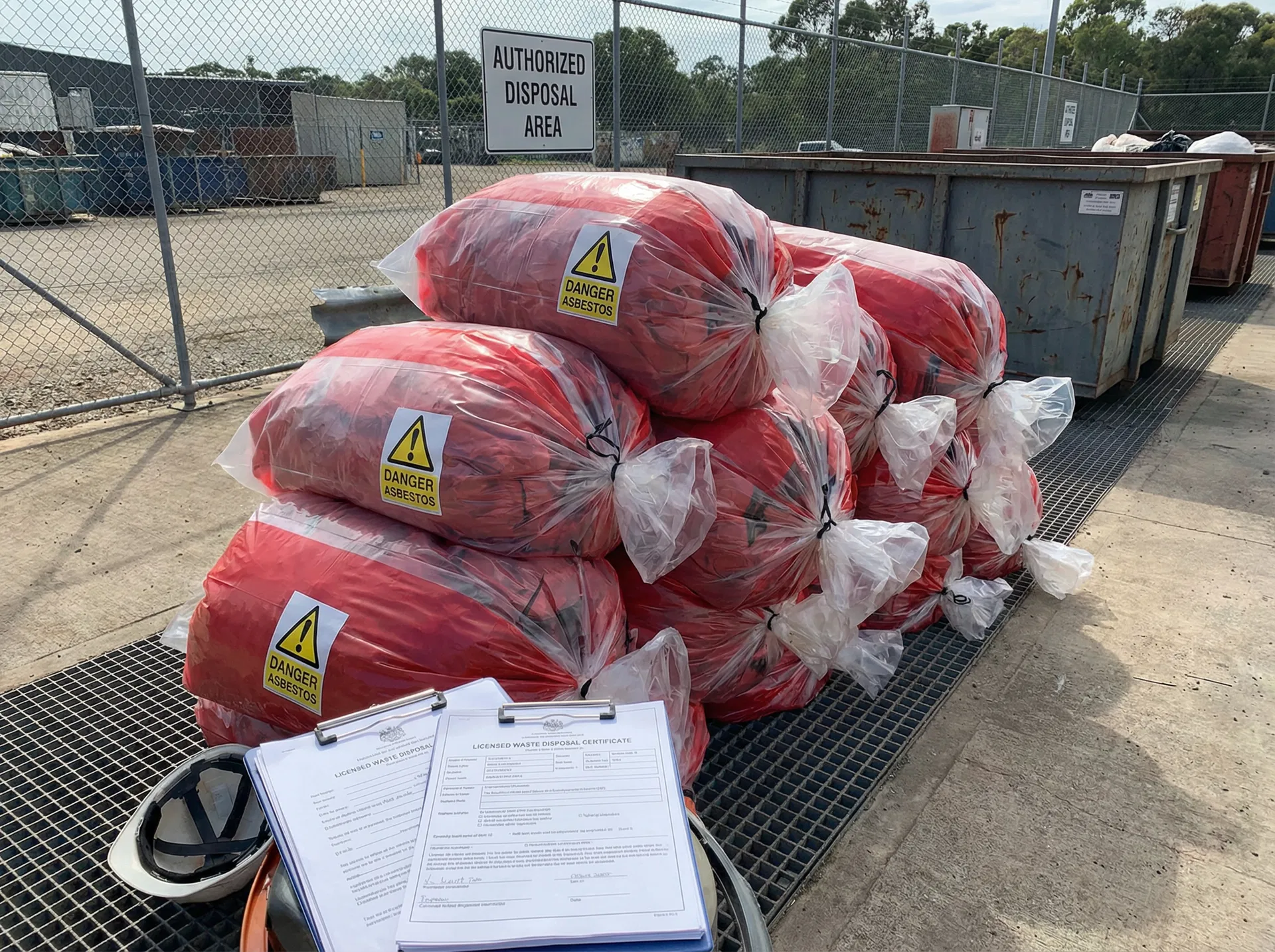
The air clearance certificate, disposal documentation, and a completion letter confirming the licensed removal had been carried out in accordance with CAR 2012 were provided to the homeowner on the second day. The documentation is suitable for retention with the property deeds and for disclosure on future property sales — particularly important given the increasing scrutiny of asbestos in the Kingston upon Thames property market.
Boiler Room Handed Back for New Heating Installation
Our heating engineer found the lagging and said he couldn't touch it. Pro Asbestos Removal were on site within the week, explained everything clearly, and handled the whole process professionally. The paperwork was thorough and gave us complete confidence that everything had been done correctly. Our new boiler is in and working perfectly.
We test, notify, and remove — all in one. Kingston and Surrey.
07345 062075Get a Free Quote