Asbestos Garage Removal in Croydon, Surrey, London & South East
If your garage was built before 2000, there is a strong chance it contains asbestos cement. Corrugated sheets become brittle with age, and once they crack or crumble, they release microscopic fibres that lodge permanently in lung tissue. We dismantle and remove asbestos garages safely, legally, and with minimum disruption to your property.
The Risk You Can't See
You can't see asbestos fibres. That's what makes them dangerous. A garage roof that looks weathered but intact can shed thousands of fibres per cubic centimetre during a single rainfall event — far above the HSE's control limit of 0.1 f/cm³ for chrysotile.
Most homeowners discover they have an asbestos garage when they plan an extension, sell their home, or notice the roof panels starting to bow and crack. By that point, the material is already in a condition where disturbance is unavoidable. The longer you leave it, the more fragile the sheets become and the higher the risk during removal.
Attempting removal yourself is not just dangerous — it is illegal. The Control of Asbestos Regulations 2012 requires that licensed asbestos work is carried out only by an licensed contractor. Disposing of asbestos waste at a household tip or skip is a criminal offence carrying an unlimited fine.
Signs You Need to Act Now
- Garage roof panels are bowing, cracking, or showing surface erosion
- White or grey fibrous dust visible on surfaces beneath the roof
- Panels have been drilled, cut, or damaged by previous work
- You are planning to demolish, extend, or sell the property
- The garage was built between 1950 and 1999
- Moss or lichen growth has accelerated surface degradation
What Asbestos Cement Is and Why Garages Are High Risk
Asbestos cement — also called AC sheet or Eternit — is a composite material made from Portland cement reinforced with chrysotile (white asbestos) fibres. Manufacturers used it extensively from the 1950s through to the mid-1980s because it was cheap, lightweight, and weather-resistant. In a bonded state, the fibres are locked into the cement matrix and present minimal risk. The problem is age.
After 30 to 40 years of UV exposure, freeze-thaw cycles, and biological growth, the cement matrix degrades. The surface becomes chalky and porous, and the fibres begin to protrude. At this stage, even light physical contact — a brush, a pressure washer, or a falling branch — can release a significant fibre burden.
Garages are particularly high risk because they are enclosed structures. Fibres released inside a garage accumulate rather than dispersing. Anyone who uses the garage regularly — storing tools, working on a car, retrieving garden equipment — is exposed repeatedly over years.
The HSE estimates that 5,000 workers die each year in the UK from asbestos-related diseases — more than any other single work-related cause. Mesothelioma, the cancer directly linked to asbestos fibre inhalation, has a latency period of 20–50 years, meaning exposure today may not manifest as disease until the 2040s or 2050s.
Source: Health and Safety Executive (HSE), Asbestos-related disease statistics, 2023
Roof Panels
Most Common Location
Corrugated AC sheets form the roof of the majority of pre-2000 garages. They deteriorate fastest due to direct UV and rainfall exposure.
Side Walls
Often Overlooked
Flat AC sheets are frequently used for garage side walls and rear panels. They are often painted, which temporarily suppresses fibre release but does not eliminate the hazard.
Soffits & Fascias
Secondary Locations
Asbestos cement was also used for soffits, ridge tiles, and guttering on older garages. These are often missed in DIY assessments.
A Complete, Compliant Service
Get Your Free Quote Today
Free site assessment for a no-obligation quotation.
Roof Removal or Full Garage Removal?
The right approach depends on the condition of the structure, your plans for the site, and whether the walls also contain asbestos. Here is how to decide.
Roof Panels Only
If the garage structure is sound and the walls are asbestos-free, removing just the roof panels and re-roofing in GRP fibreglass or corrugated metal is the most cost-effective option.
- Lower cost than full demolition
- Garage structure retained
- Re-roofing included in the same visit
- Suitable when walls are brick or timber
Full Garage Demolition
When the walls also contain asbestos cement, when the structure is beyond repair, or when you need the space cleared for an extension or new build, full demolition is the correct approach.
- Complete removal of all asbestos-containing materials
- Site left clear and level
- Optional concrete base removal
- Single visit, single disposal certificate
- Recommended for pre-1985 garages
How We Work
Free Site Survey
We assess the garage structure, confirm the presence of asbestos cement, and provide a written quote — usually within 24 hours.
Preparation
The area is cordoned off and signage erected. The team dons full PPE including P3 respirators before work begins.
Dismantling
Sheets are carefully removed intact where possible, wetted to suppress dust, and lowered to ground level without breakage.
Bagging & Labelling
All material is double-bagged in UN-approved asbestos waste sacks, labelled with the correct hazard classification, and loaded for transport.
Full Documentation
Waste is transported directly to a licensed disposal facility. Consignment note and waste transfer certificate issued on completion.
When You Need to Act
Roof panels are cracking or bowing
Act NowCracked panels release fibres continuously. Every day of delay increases cumulative exposure for anyone using the garage or garden.
You are selling the property
This MonthAsbestos garages must be disclosed to buyers. Removal before listing removes a negotiating point and avoids survey-triggered price reductions.
Planning an extension or new build
This WeekBuilding control will require asbestos removal before groundworks begin. Scheduling removal early avoids project delays.
Garage is intact but over 40 years old
Plan AheadEven visually sound panels degrade internally. A survey now establishes a baseline and avoids emergency removal costs later.
The Most Expensive Mistake We See
The most expensive mistake we see is homeowners hiring a general builder or skip company to demolish an asbestos garage. Non-licensed contractors cannot legally handle asbestos waste, the skip company will refuse to take it, and the homeowner ends up paying twice — once for the failed demolition and once for a licensed contractor to finish the job. Licensed removal from the outset costs less and produces the legal paperwork your solicitor will need.
How We Approach Garage Removal
Every garage removal starts with a free site assessment. We confirm the presence of asbestos cement visually and, where the material is ambiguous, take a sample for laboratory analysis before quoting. On the day, the team erects physical barriers and signage, dons full PPE including P3 respirators, and removes sheets intact wherever possible — wetting them to suppress any fibre release. All waste is double-bagged in UN-approved packaging, labelled, and transported directly to a licensed disposal facility. You receive a consignment note and a waste transfer certificate on completion, which your solicitor or building control officer will require.
South Croydon Based
Licensable work may only be carried out by an HSE-licensed contractor — ask to see the licence before work begins. You can verify our licence number on the HSE public register.
Trained Team
Every operative holds current UKATA asbestos awareness training certificates. Pro Asbestos Removal is an ARCA member.
Full Paperwork
Consignment note, waste transfer certificate, and a completion letter suitable for solicitors and building control.
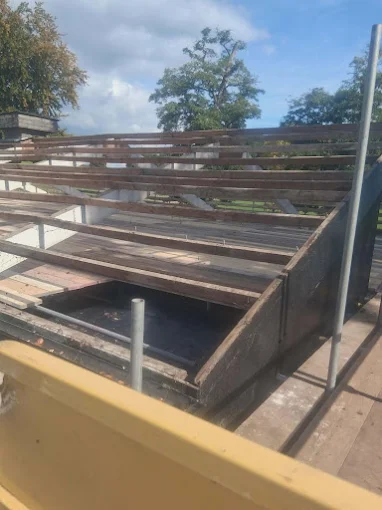
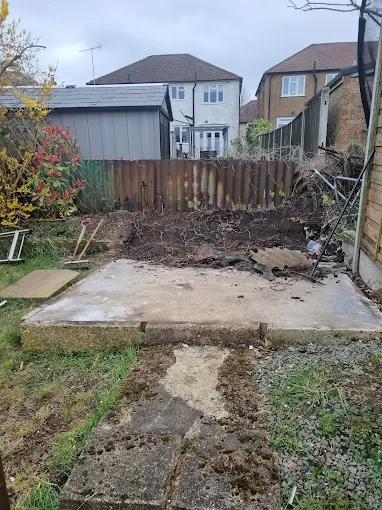
From Our Recent Work
Common Questions
How do I know if my garage contains asbestos?
Any garage built before 2000 may contain asbestos cement. The corrugated grey sheets used on roofs and walls are the most common form. If you are unsure, we can carry out a survey and take samples for laboratory analysis before any removal work begins.
Can I demolish an asbestos garage myself?
No. The Control of Asbestos Regulations 2012 requires that licensed asbestos work is carried out only by an licensed contractor. DIY removal risks releasing fibres into your home and garden, and disposing of asbestos waste at a household tip or skip is a criminal offence.
What happens to the concrete base?
The concrete base is not asbestos-containing and can remain or be removed separately. We can arrange base removal as part of the same visit — just let us know when you request your quote.
How long does garage removal take?
A standard single-car garage typically takes half a day to a full day, depending on size and access. We will confirm the expected duration when we provide your written quote.
Do I need to vacate the property during removal?
We recommend keeping children and pets away from the work area during removal. You do not need to leave the property, but you should avoid the garden adjacent to the garage until the area has been cleared and the team has confirmed completion.
Further Reading
What Is Asbestos?
Types, risks, and where it is found in UK homes and garages.
Asbestos Removal Cost Guide
Typical price ranges for garage removal across Surrey and London.
Do I Need an Asbestos Survey?
When a survey is legally required before removal work begins.
Asbestos Regulations UK
CAR 2012, licensing, and duty holder obligations.
Ready to Get This Sorted?
Free site assessment for a no-obligation quotation.
Pro Asbestos Removal · Surrey, London & South East · Mon–Sat 7am–6pm
Areas We Cover
- Croydon — We offer asbestos removal services in Croydon
- Surrey — We offer asbestos removal services across Surrey
- Guildford — We offer asbestos removal services in Guildford
- South London — We offer asbestos removal services across South London
- London — We offer asbestos removal services across London
- Woking — We offer asbestos removal services in Woking
- Banstead — We offer asbestos removal services in Banstead
- Sutton — We offer asbestos removal services in Sutton
- Bromley — We offer asbestos removal services in Bromley
- Epsom — We offer asbestos removal services in Epsom
- Reigate — We offer asbestos removal services in Reigate
- Redhill — We offer asbestos removal services in Redhill