Artex Ceiling Removal — Victorian Terrace, Worthing
Chrysotile asbestos confirmed in 1970s Artex ceilings throughout a Worthing Victorian terrace. Wet scraping method, negative-pressure enclosures, air clearance certificate issued — plastering commenced the following day.
The Hidden Asbestos in Victorian Renovation Projects
Victorian and Edwardian properties in Worthing and across the West Sussex coast are among the most popular renovation targets in the South East. They offer large rooms, period features, and strong resale values — but they also frequently contain asbestos applied during 1960s and 1970s modernisation works. Artex textured coatings were widely used to cover cracked Victorian plasterwork, and the formulations used before 1985 routinely contained chrysotile asbestos.
The critical risk in renovation projects is that plasterers, decorators, and builders who sand or scrape Artex without testing it first may be unknowingly releasing asbestos fibres. This is one of the most common sources of occupational asbestos exposure in the UK today. Testing before any work that disturbs the Artex is not optional — it is a legal requirement under the Control of Asbestos Regulations 2012.
In this Worthing case, the homeowner had correctly instructed testing before the plasterer began work. The chrysotile content confirmed by the laboratory meant the Artex required removal by a licensed contractor before any skimming could take place.

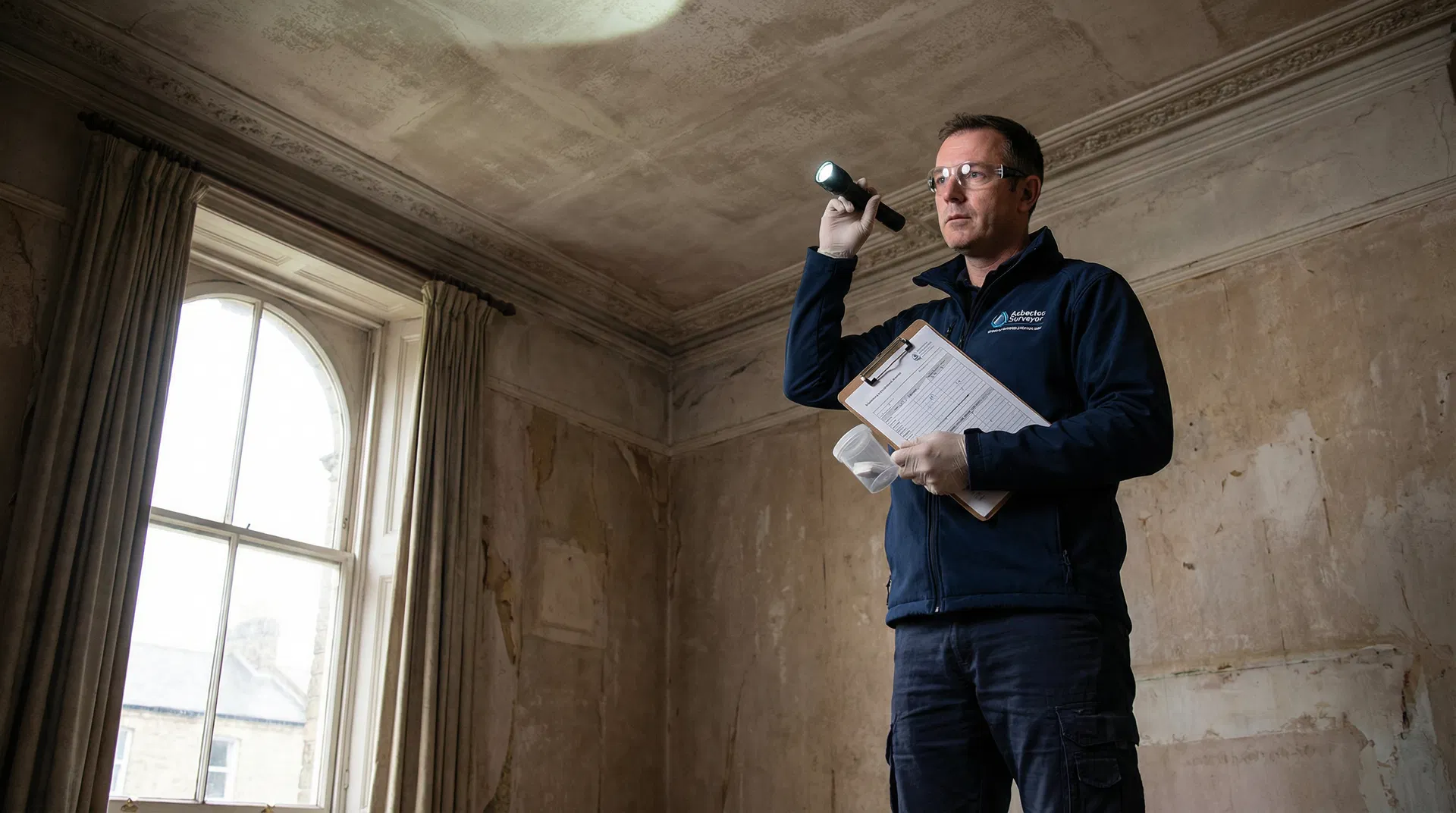
Worthing Victorian terrace: chrysotile artex removed from 3 rooms under full licensed conditions. Air clearance test passed first time.
Dry sanding or grinding Artex that contains asbestos generates a fine dust that carries chrysotile fibres deep into the lungs. These fibres are invisible to the naked eye and remain airborne for hours in an enclosed room. The Control of Asbestos Regulations 2012 require that all materials likely to contain asbestos are tested before any work that may disturb them. If your plasterer, decorator, or builder proposes to sand or skim over Artex without testing it first, stop work and arrange testing immediately.
How the Removal Was Carried Out
Sampling & Laboratory Confirmation
The homeowner in Worthing was undertaking a full renovation of a Victorian terraced property. The ceilings throughout the ground floor and first floor had been Artexed at some point in the 1970s — a common upgrade applied to Victorian properties during that decade. Before the plasterer could skim the ceilings, the Artex needed to be assessed. We took bulk samples from three locations on each floor and submitted them to our UKAS-accredited laboratory. Results confirmed chrysotile asbestos in the Artex on both floors at concentrations of 3–5% by weight.
Enclosure & Preparation
Artex removal is notifiable non-licensed work under the Control of Asbestos Regulations 2012 — it requires notification to the HSE at least 14 days before work commences, and must be carried out by trained operatives using appropriate controls. We notified the HSE and established a negative-pressure enclosure in each room prior to removal, sealing doorways and ventilation openings with polythene sheeting. HEPA-filtered air cleaning units were run throughout the works to maintain negative pressure and capture any airborne fibres.
Wet Scraping — No Dry Sanding
The Artex was removed by wet scraping — the surface was saturated with water using a low-pressure sprayer, allowed to absorb for 15 minutes, then scraped from the ceiling using hand tools. Wet scraping is the only acceptable method for Artex removal: dry sanding or grinding Artex releases large quantities of chrysotile fibres into the air and is prohibited under the Control of Asbestos Regulations. The wet method keeps fibres bound to the material and dramatically reduces airborne fibre counts. All scraped material was collected and double-bagged immediately.
Air Clearance & Plastering Handover
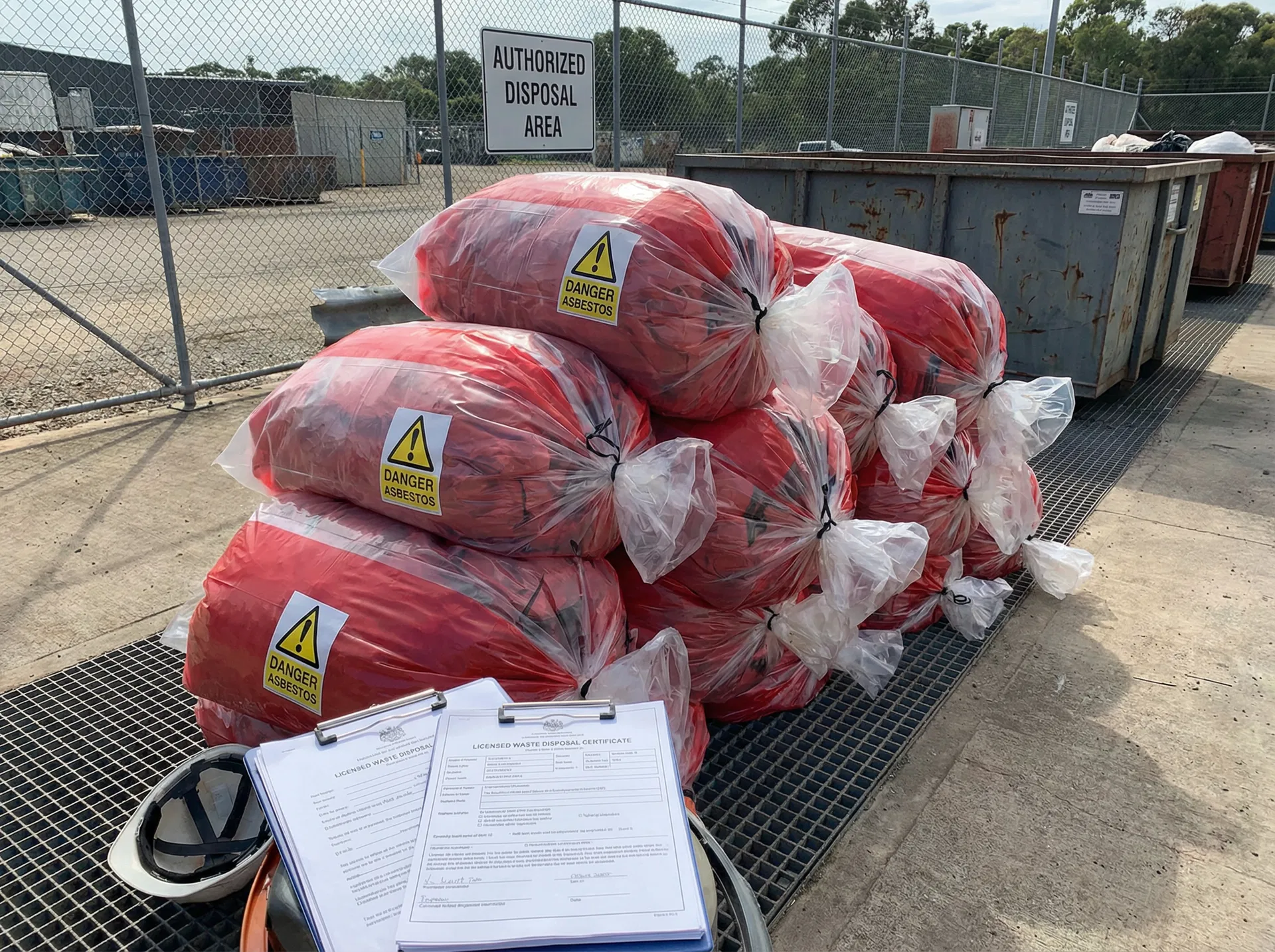
On completion of the removal in each room, an air clearance reading was taken to confirm the room was safe for unrestricted access. All readings were below the clearance criterion of 0.01 fibres per millilitre. The clearance certificate was issued covering all rooms, and the plasterer was able to commence skimming the following day. The homeowner received the full documentation pack: HSE notification confirmation, laboratory reports, consignment notes, and clearance certificate.
Everything Included in This Job
We cover all of West Sussex. Artex sampling, laboratory analysis, and removal if required. Free quotes, rapid turnaround.
Get a Free Quote07345 062075Artex Testing & Removal Across West Sussex
We cover Worthing, Chichester, Bognor Regis, Shoreham, and all of West Sussex. Free quotes, rapid lab turnaround, full documentation pack.